AI Isn’t Replacing Software Engineers - It’s Making Them Better
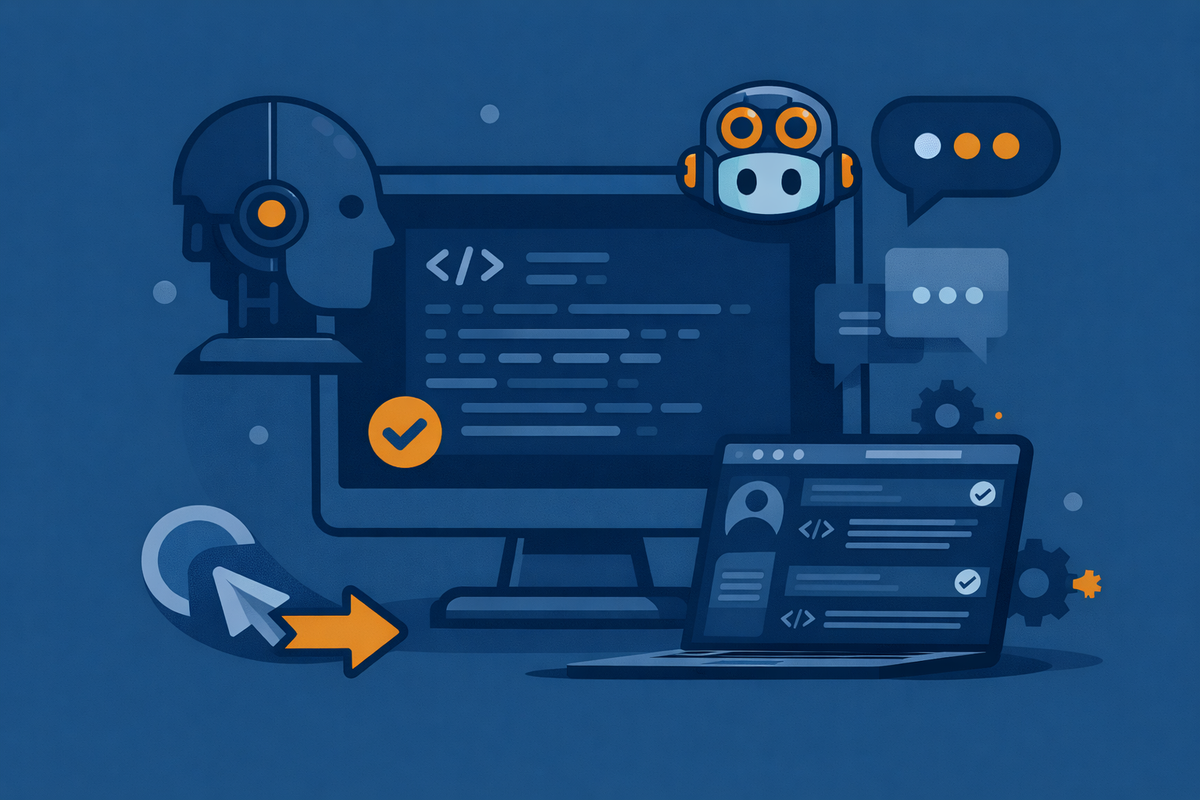
Not long ago, I wrote about the growing concern that AI might replace software developers. At the time, the fear felt justified. Headlines were loud, demos were impressive, and there was a real sense that large language models could automate significant parts of software development.
Fast forward to today, and the reality looks very different.
AI hasn’t replaced software engineers. Instead, it has been embraced by the majority of developers and organisations as a productivity tool - one that supports day-to-day work, reduces cognitive load, and allows engineers to focus on higher-value problems.
In practice, AI has become a collaborator, not a replacement.
From Fear to Adoption
The early narrative around AI in software engineering was binary:
- Either it replaces developers
- Or developers resist it
What actually happened is more nuanced.
Most teams now use AI in some form, but human decision-making, experience, and judgement remain central. AI excels at pattern recognition, repetition, and acceleration - but it still lacks accountability.
This is why adoption has been so widespread: AI fits naturally into how engineers already work.
How Software Engineers Actually Use AI Today
AI is no longer a novelty tool used in isolation. It is embedded directly into development workflows.
Code Assistance and Autocomplete
Tools like GitHub Copilot, Cursor, and Claude are now common across professional teams.
They are used to:
- Generate boilerplate code
- Suggest implementations for known patterns
- Speed up repetitive tasks
- Explore alternative approaches quickly
Crucially, developers are still:
- Designing the architecture
- Defining requirements
- Reviewing and validating output
AI accelerates execution, but humans remain in control.
Faster Development Without Cutting Corners
One of the biggest wins AI has brought is speed without sacrificing quality.
Developers can:
- Scaffold features in minutes instead of hours
- Move faster between ideas and implementations
- Reduce time spent on routine or low-value work
This does not mean writing less thoughtful code - it means spending more time on:
- System design
- Edge cases
- Performance
- Security
- Business logic
AI shifts effort away from typing and towards thinking.
Improved Accuracy Through Review and Refactoring
AI is increasingly used after code is written, not just during creation.
Common use cases include:
- Reviewing pull requests
- Identifying potential bugs
- Highlighting security concerns
- Suggesting refactors or simplifications
- Checking for consistency with existing patterns
This works particularly well as a second pair of eyes, especially in large codebases where context switching is expensive.
Used correctly, AI reduces human error rather than introducing it.
Pull Request Reviews at Scale
Pull request reviews are one of the most time-consuming parts of software engineering.
AI tools are now used to:
- Summarise changes in a PR
- Flag risky sections of code
- Generate review comments or questions
- Suggest improvements before a human reviewer even looks
This doesn’t remove the need for peer review - it makes reviews faster, more focused, and higher quality.
Engineers spend less time scanning for obvious issues and more time discussing design and intent.
Agent Mode and Task Automation
One of the more recent shifts is the rise of agent-based workflows.
With agent mode, AI can:
- Run tests
- Fix failing builds
- Update dependencies
- Refactor code across multiple files
- Generate documentation
- Perform repetitive maintenance tasks
These agents don’t operate autonomously in production - they operate under human supervision.
The result is less time spent on housekeeping and more time on meaningful engineering work.
Why AI Still Can’t Replace Engineers
Despite the progress, AI fundamentally lacks:
- Understanding of business context
- Responsibility for decisions
- Ownership of long-term systems
- The ability to negotiate trade-offs with stakeholders
Software engineering is not just about producing code - it’s about:
- Understanding users
- Balancing constraints
- Making judgement calls
- Maintaining systems over time
AI supports these activities, but it cannot replace them.
A Shift in What “Good Engineering” Looks Like
As AI becomes part of everyday tooling, the definition of a strong engineer is evolving.
Increasingly valuable skills include:
- Clear problem definition
- Strong system design
- Ability to guide and evaluate AI output
- Code review and quality assurance
- Security and risk awareness
The best engineers are not those who type the fastest, but those who use tools intelligently and critically.
Conclusion: Augmentation, Not Replacement
AI has been embraced not because it threatens software engineers, but because it makes them more effective.
It helps engineers:
- Work faster
- Reduce errors
- Focus on higher-value work
- Deliver better outcomes
Rather than replacing roles, AI is reshaping how work is done - and software engineering is one of the clearest examples of this.
The future isn’t fewer engineers.
It’s better-equipped engineers.
Comments ()